
Opening Answer
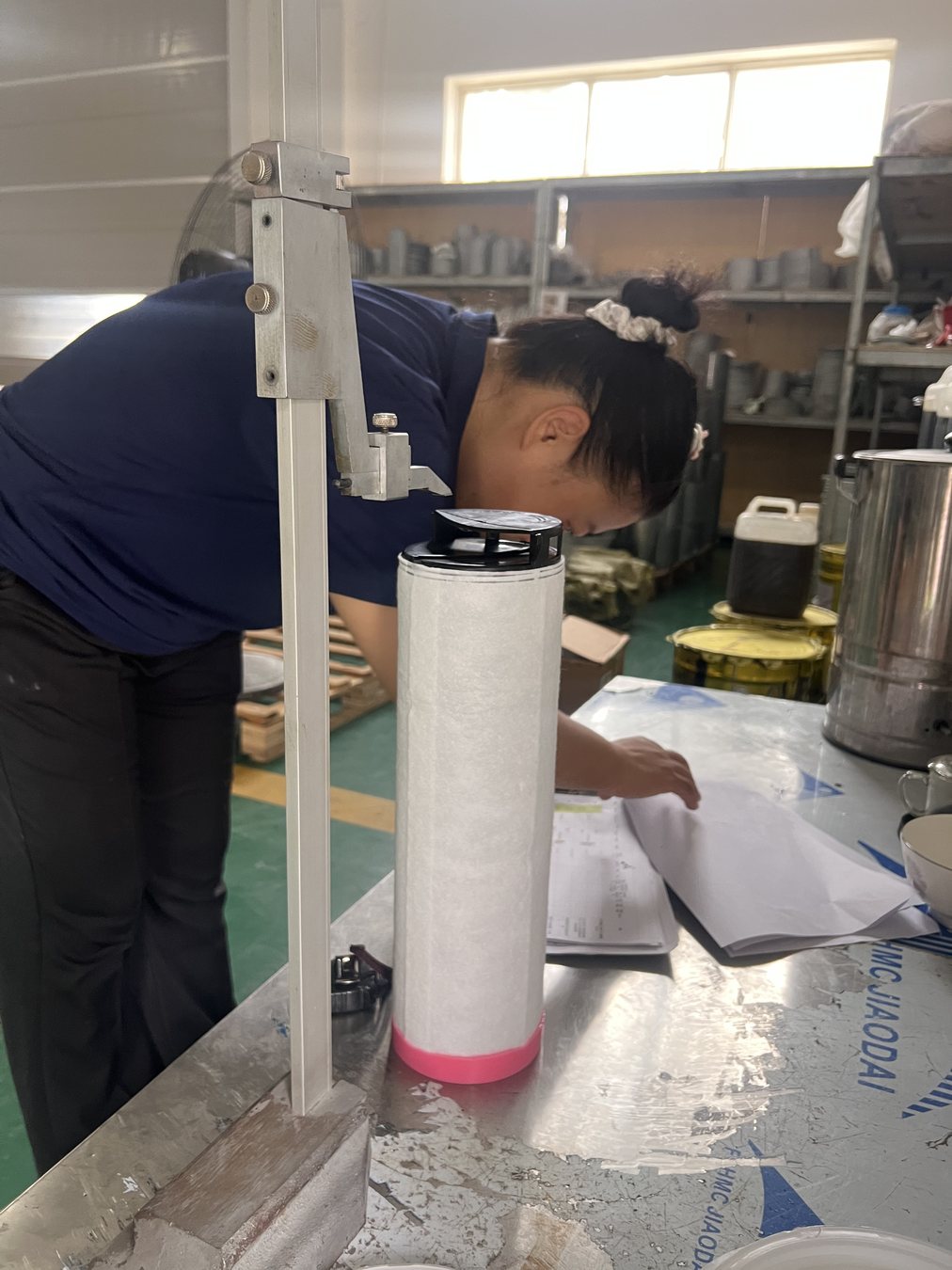
To measure an air filter for replacement, record the outer diameter, inner diameter and height, then send clear photos of the label, top, bottom and side view. If the filter is part of a primary and safety set or a kit, measure and photograph every element. Do not rely only on one reference number or one photo when ordering in bulk.
For distributors and importers, measurement is a purchasing control step. A small mismatch in structure or size can delay quotation, cause wrong shipments or create claims after the goods arrive. The supplier can usually check faster when the buyer sends the number, dimensions and old filter photos together.
This guide explains a practical measurement workflow for heavy duty air filter buyers. It does not provide tolerance rules or performance claims. Those details must come from verified product data, buyer samples or agreed specifications.
What Measurements Matter Most?
The most common air filter measurements are outer diameter, inner diameter and height. Depending on filter design, buyers may also need the larger-end diameter, smaller-end diameter, seal structure, end-cap shape or the size of both primary and safety elements.
Use the terms clearly:
| Measurement | What it means | Buyer note |
|---|---|---|
| OD / outer diameter | Outside width of the filter body or end | Some filters have different diameters at different ends |
| ID / inner diameter | Inside opening or center hole size | Measure the correct end if both ends differ |
| Height / length | Overall filter height | Record the full element height, not only media height |
| Primary element size | Size of the main air filter | Needed when ordering a set |
| Safety element size | Size of the inner or secondary filter | Needed when the buyer requires a complete set |
| Photo evidence | Label and product shape | Helps confirm structure and reference number |
If your old filter has a tapered body, unusual end cap or two different ends, do not reduce it to one simple OD. Send photos and describe which side was measured.
Step 1: Clean the Old Filter Label First
Before measuring, clean enough of the old filter label to read the number. The number may be an OE reference, aftermarket reference or supplier number. Take a close photo before the label becomes more damaged.
A label photo should show:
- The complete number
- Any brand name printed on the filter
- Any arrow or airflow marking if visible
- Whether the number includes a suffix, slash or hyphen
Do not rewrite the number from memory. If one character is uncertain, mark it as uncertain and send the photo. In filter sourcing, one wrong character can lead to a different product.
Step 2: Measure Outer Diameter Correctly
Outer diameter is usually one of the first dimensions suppliers check. For a round air filter, measure across the widest outside edge. If the filter has different end diameters, record both instead of forcing one number.
For non-round or special-shape filters, do not describe it only as OD. Record length and width if that is more accurate, and include photos from the top and side.
Common OD mistakes include:
- Measuring across a damaged or compressed area
- Measuring the carton instead of the filter
- Recording only the smaller end when the filter has two outside diameters
- Rounding aggressively without telling the supplier
A supplier can work with practical measurements, but the buyer should make clear how the measurement was taken.
Step 3: Measure Inner Diameter or Opening Size
Inner diameter is important because it affects how the filter sits in the air cleaner housing. Measure the opening on the relevant end. If there are two openings or two ends with different shapes, record both and send photos.
When a safety element sits inside a primary element, the inner structure may be easy to overlook. Buyers should separate the elements before measuring if the old filter set can be safely separated. If not, take clear photos and tell the supplier it is a set or kit.
Step 4: Measure Overall Height
Height should be the full height of the filter element. Do not measure only the paper media section if the end caps add height. For a heavy duty air filter, the supplier needs the overall installed element size, not only the visible pleated part.
If the old filter is deformed, state that the measurement is from a used sample. When possible, compare the measurement with the old product label or existing product data.
Step 5: Confirm Whether It Is Single Filter, Set or Kit
A common B2B ordering mistake is sending the size of only one element when the buyer expects a complete set. Heavy duty air filter systems may use a primary element and a safety or secondary element. Some product pages and supplier catalogs list these together as a set or kit.
Before quotation, write one of these clearly:
- “Single primary air filter required.”
- “Safety/secondary element required.”
- “Primary plus safety set required.”
- “Complete kit required; please confirm all included elements.”
If the buyer does not know, send all photos and ask the supplier to check. Do not assume the supplier knows whether the customer wants one piece or a pair.
Step 6: Send Photos That Prove the Measurements
Photos are part of the measurement package and support factory quality control. A good photo set includes:
- Label close-up
- Full side view
- Top view
- Bottom view
- Photo beside a measuring tool if possible
- Separate photos for each element in a set
Photos help catch problems that numbers and dimensions miss. They can show end-cap style, sealing surface, damage, missing inner element or a label from a different item.
Common Mistakes
The first mistake is measuring only one dimension. A supplier cannot safely confirm a heavy duty air filter from height alone.
The second mistake is sending a photo without a readable label or scale. The photo may help, but it cannot replace number and size confirmation.
The third mistake is forgetting the safety element. When a truck or machine uses primary and safety elements, ordering only one part may leave the buyer with an incomplete service set.
The fourth mistake is inventing or guessing application data. If the buyer is not sure about the truck, engine or machine model, it is better to say “application to be confirmed” and rely on number, photo and dimensions first.
Buyer Checklist
Before sending the RFQ, prepare:
- OE or aftermarket number from label or catalog
- OD or relevant outside size
- ID or opening size
- Overall height
- Photos from label, top, bottom and side
- Whether buyer needs primary, safety, set or kit
- Quantity and destination
- Application information if known and reliable
FAQ
Can a supplier quote from dimensions only?
Sometimes dimensions can narrow the search, but the quotation is more reliable when dimensions are combined with a number and photo.
Should I measure a used and dirty filter?
Yes, if that is the only sample available, but clean the label area and tell the supplier the measurement comes from a used filter. Send photos so the supplier can judge structure.
What if my filter has two different outer diameters?
Record both and label them clearly. Send top and bottom photos so the supplier can understand which side each dimension describes.
Do I need to measure the safety element separately?
Yes, if the buyer needs a complete set. The primary and safety elements are different pieces and should be confirmed separately.
CTA
Need a replacement air filter checked before quotation through Contact / RFQ? Send the old filter number, OD, ID, height, photos from multiple angles, application information if reliable and required quantity. Jinguan can review the information and confirm the matching direction before quotation.
---