
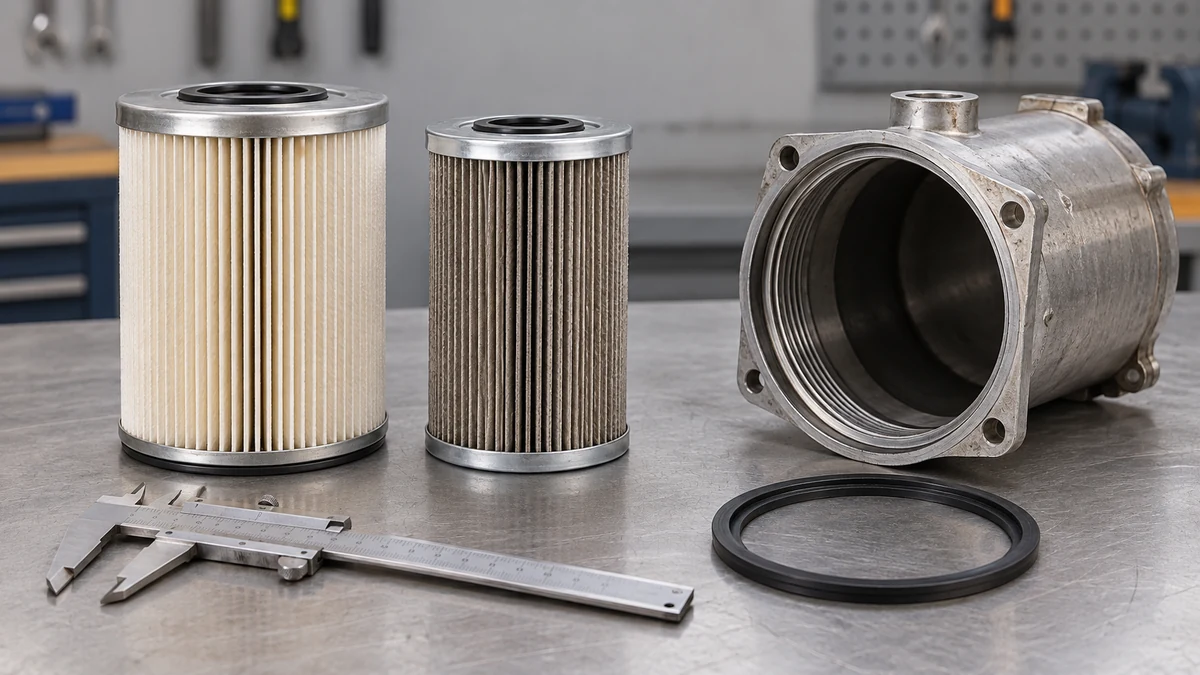
A replacement filter arrives. The part number looks correct. The cross reference looks correct. The filter even looks almost identical to the original one.
But when the customer tries to install it, it does not fit the housing.
At this point, it is easy to say: “The filter is wrong.”
Sometimes it is. But before reaching that conclusion, there are several things I prefer to check.
In the replacement filter business, a small difference in dimensions, sealing structure or application can turn a seemingly correct filter into the wrong fit.
1. Start with the Exact Application
The first question should not only be: “What is the filter number?”
I also want to know: What vehicle, engine or equipment is it being installed on?
A cross-reference number is useful for identifying a possible replacement filter, but it should not replace application confirmation when there is uncertainty.
This is especially important for trucks and construction machinery, where similar-looking filters may be used in different housings or applications.
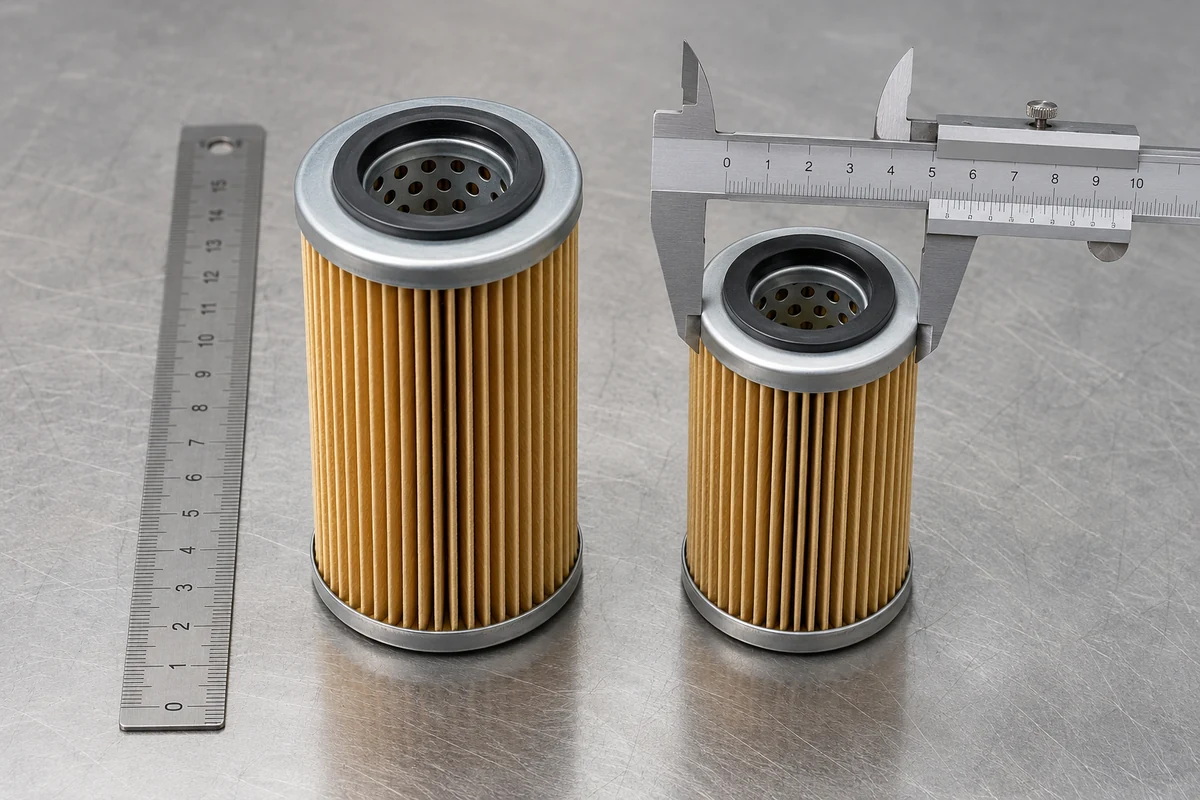
2. Compare the New Filter with the Old One
If the original filter is still available, put the two filters side by side.
Do not only compare the overall appearance. Look carefully at:
- overall height;
- outer and inner diameters;
- mounting or sealing areas;
- end-cap shape;
- thread or connection, where applicable;
- position of any sensor, drain or other fitting.
Sometimes the difference is obvious. Sometimes it is only a few millimeters or a small structural detail. But that small difference may be enough to prevent correct installation.
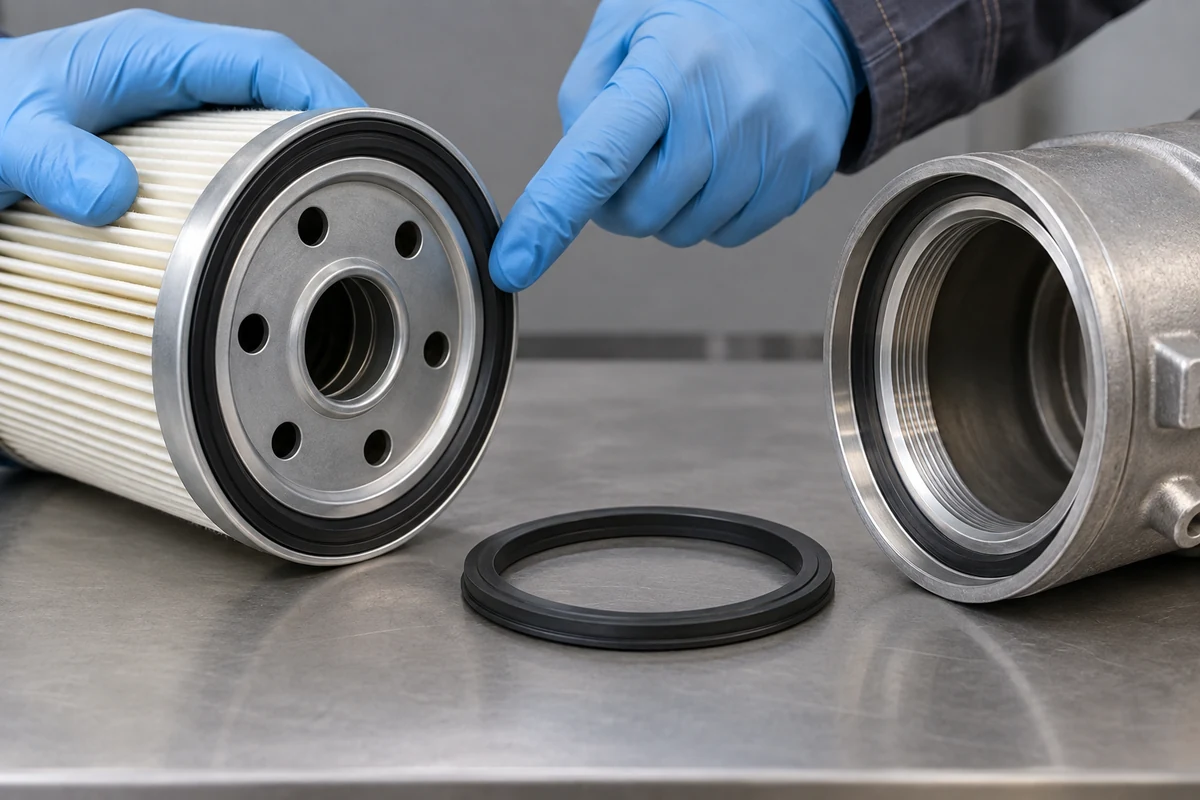
3. Check the Sealing Area
This is one detail I pay particular attention to.
A replacement filter may have similar overall dimensions but a different sealing surface, gasket position or end-cap structure.
If the seal cannot sit correctly against the housing, forcing the filter into place is not the solution. The filter and housing should be checked again before installation continues.
4. Recheck the OEM Number and Cross Reference
A filter cross reference is extremely useful, but it is an identification tool—not a guarantee that every listed replacement is identical in every detail.
When a filter does not fit, go back to the original information. Check:
- OEM number;
- cross-reference number;
- equipment or engine application;
- dimensions;
- available photos or drawings.
Also make sure that the number was copied correctly. One wrong digit can send the whole sourcing process in the wrong direction.
You can use the Jinguan Filter Catalog to search verified product records by part number, OE number or published cross reference.
5. Do Not Ignore the Housing Itself
The filter is not always the only thing worth checking.
The housing may contain an old gasket, incorrectly positioned component, contamination or another installation issue.
The original filter can also provide useful clues. If the old filter fits correctly but the new one does not, comparing the two carefully is often more useful than repeatedly trying to force the new filter into place.
6. When Information Is Unclear, Use Photos and Measurements
When a customer tells me, “This filter doesn't fit,” the most useful next step is usually not an argument about whose fault it is. It is getting better information.
I prefer to ask for:
- the filter part number;
- equipment or engine information;
- photos of the old and new filters;
- photos of the housing;
- key measurements;
- a photo showing exactly where the fitment problem occurs.
If necessary, an original sample can make confirmation much easier.
The goal is simple: Find the difference before deciding what caused the problem.
What Buyers Should Confirm Before Ordering
For replacement filters, I would normally try to confirm:
- OEM or reliable cross-reference number;
- vehicle, engine or equipment application;
- key dimensions;
- sealing and end-cap structure;
- thread or connection where applicable;
- sensor, drain or fitting requirements where applicable;
- photos or original sample when the information is uncertain.
A filter that looks similar is not necessarily the correct filter. And a matching cross-reference number does not mean we should stop checking when something does not make sense.
In my experience, the best way to solve a fitment problem is not to start by deciding who is responsible. Start by finding exactly what is different.
Need Help Checking a Replacement Filter?
If you are unsure about a replacement filter application, send the OE number, filter photos and verified dimensions. Send a part-number inquiry, and Jinguan can help review the available identification information before ordering.
FAQ
Does a matching cross-reference number guarantee that a filter will fit?
No. A cross reference is an identification tool. Application, dimensions, sealing geometry, end caps, threads and fittings should still be checked when anything is unclear.
What should I measure when a replacement filter does not fit?
Measure the structure-appropriate overall height, outer and inner diameters, mounting or sealing areas, and the thread or connection where applicable. Record the exact measurement points.
What photos are most useful for diagnosing a fitment problem?
Provide the old and new filters, their labels, the housing, key measurement positions, and a clear view of the exact point where installation is blocked.